

Is Gallbladder Surgery Risky? Senior Surgical Care with Dr Rengan in Chennai
Patient information prepared for Dr (Major) RS Rengan
You had your hernia repaired, went through recovery and expected the problem to be behind you. Now there is another bulge, a pulling sensation or discomfort near the old operation site. It is understandable to feel worried about facing surgery again.
If you think your hernia has returned, arrange an assessment with a surgeon experienced in recurrent hernia repair. A physical examination, review of your previous operation and, when needed, imaging can establish what has happened. The next step depends on the type of hernia, your symptoms and your overall health.
A recurrence does not automatically mean that the old mesh must be removed or that you need an immediate operation. It does mean that the next decision deserves careful planning.
Dr (Major) R S Rengan has more than 37 years of experience, with a practice focused on hernia surgery, abdominal wall reconstruction, gastrointestinal and laparoscopic surgery in Chennai. Patients with a suspected recurrence can seek an assessment or second opinion to understand their treatment options. Dr (Major) R S Rengan: Professional profile
First, know when to seek urgent care
Go to the nearest emergency department if you develop severe or rapidly worsening pain, repeated vomiting, a swollen abdomen with inability to pass wind or stools, or a painful bulge that becomes firm and will no longer go back in. A change in skin colour over the swelling is another warning sign.
These symptoms may indicate trapped bowel, obstruction or a problem with its blood supply. Do not wait for a routine appointment or try to force a painful swelling back inside. A newly irreducible swelling also needs prompt assessment, even if pain is initially mild.
NHS: Hernia symptoms and urgent advice, NHS: Umbilical hernia
What is a recurrent hernia?
A recurrent hernia is a hernia that develops again at or near the site of a previous repair. It can affect the groin, belly button or an abdominal scar.
The term describes several different problems:
- Recurrent inguinal hernia: a groin hernia returns after an earlier repair.
- Recurrent umbilical hernia: a hernia returns around the belly button.
- Recurrent incisional hernia: a previously repaired hernia at an abdominal operation scar develops again.
These conditions are not treated identically. A small recurrent groin hernia and a large recurrent abdominal wall hernia may require very different operations and recovery plans. Recurrence can become apparent soon after surgery or years later.
Does a bulge after hernia surgery always mean recurrence?
No. Particularly during early recovery, swelling can have another explanation. Possibilities include a seroma, which is a collection of fluid, a collection of blood, or thickened healing tissue. Some patients develop a bulge without a new opening in the repaired abdominal wall.
Pain alone also does not prove that a hernia has returned. Scar discomfort, nerve irritation and other conditions may cause symptoms after surgery. Persistent pain deserves assessment even when there is no obvious lump.
Rather than repeatedly pressing the area or deciding from a photograph, note when the swelling appears, whether it changes on lying down and what makes it uncomfortable. Share those details with your surgeon.
American College of Surgeons: Ventral hernia repair, American College of Surgeons: Groin hernia repair
Why can a hernia come back after surgery?
There is rarely a useful answer without reviewing the original repair. Factors can include the size and complexity of the hernia, tissue quality, previous wound infection, the way the repair healed and technical aspects of the operation.
Smoking, excess weight and poorly controlled diabetes can affect healing and surgical risk. A persistent cough or repeated straining may also be relevant to the assessment. Some people have several contributing factors; others develop a recurrence despite appropriate surgery and sensible recovery precautions.
American College of Surgeons: Ventral hernia repair, Perioperative optimisation in complex abdominal wall hernias
A recurrence does not, by itself, prove that the patient did something wrong or that the previous surgeon made a mistake. The practical question is what can be learnt from the first repair to guide the next one.
If you are worried that lifting one bag or climbing stairs caused the problem, discuss that concern openly. Avoid blaming yourself or stopping all activity without advice.
What should I do if I think my hernia has returned?
1. Arrange a surgical review
For a stable bulge without emergency symptoms, book a consultation. You can return to your original surgeon or seek a second opinion, especially if the hernia is large, has returned more than once or is associated with persistent pain.
When booking, say that you have already had a repair. Mention previous mesh placement, wound infection or multiple operations if these apply.
2. Bring records from your earlier operation
Useful documents include:
- The discharge summary and detailed operation notes.
- Any mesh or implant information supplied after surgery.
- Previous ultrasound, CT or MRI reports and the actual scan images, if available.
- Records of wound problems or additional operations.
- Your medication list, allergies and details of other health conditions.
The operation notes may explain which tissue layer was used and where mesh was placed. “Keyhole surgery” or “open surgery” alone may not provide enough detail for planning.
3. Describe how the problem affects your life
Does the swelling limit walking, work, sleep, exercise or eating? Is it growing? Is the discomfort occasional or persistent? These answers help make the consultation about your needs, rather than the appearance of the bulge alone.

Will I need an ultrasound or CT scan?
Your surgeon will first examine you and review your history. Imaging is chosen to answer a specific question.
Ultrasound can help when a groin swelling is difficult to confirm on examination. CT is particularly useful in planning larger or complex incisional hernia repairs. It can help show the size of the abdominal wall opening and its relationship to surrounding structures. MRI is an option in selected situations.
HerniaSurge Group: International guidelines for groin hernia management, European Hernia Society: Midline incisional hernia guidelines
Not everyone needs every scan. Bring existing images before paying for new tests, and let the treating team decide whether they provide enough information.
Does every recurrent hernia need another operation?
Surgery is the way to repair the underlying opening, but the timing requires an individual decision. Selected patients with a reducible hernia and little discomfort may be offered observation after discussing the risks and alternatives. Evidence about watchful waiting for a first-time groin hernia should not be assumed to apply to every recurrence.
HerniaSurge Group: International guidelines for groin hernia management, American College of Surgeons: Ventral hernia repair
Increasing pain, enlargement, difficulty reducing the swelling or restriction of daily activity are reasons to reassess the plan. A recommendation to observe should include what symptoms to report and when to return.
A hernia belt may provide temporary support for some patients, but it does not close the defect. Medicines and exercises cannot repair a recurrent hernia either. Use any support garment only after advice about whether it is appropriate for your situation.
How is recurrent inguinal hernia treated?
For a recurrent groin hernia, the previous operation often influences the choice of approach. International guidance generally recommends approaching the recurrence through a different tissue plane: a posterior repair after a previous anterior repair, and an anterior repair after a previous posterior repair. HerniaSurge Group: International guidelines for groin hernia management
In everyday terms, this may mean a keyhole repair after a conventional open anterior repair, or an open anterior operation after a previous keyhole posterior repair. The actual operation notes matter because not all open repairs use the same plane.
If both planes have already been operated on, or the recurrence accompanies significant chronic pain, specialist assessment becomes particularly important. Ask your surgeon to explain why the proposed approach suits your previous surgery.
When does a recurrent hernia need abdominal wall reconstruction?
A large or repeatedly recurrent incisional hernia can involve more than a single small opening. Previous operations may have altered the abdominal wall, and a long-standing hernia may be difficult to bring back into the abdomen comfortably.
Abdominal wall reconstruction, or AWR, aims to restore abdominal wall continuity and function while reinforcing the repair. In selected cases, techniques such as component separation or transversus abdominis release, known as TAR, help bring the tissues together. These are options for particular anatomical problems, not requirements for every recurrence.
Perioperative optimisation in complex abdominal wall hernias, European Hernia Society: Midline incisional hernia guidelines
At Dr Rengan’s Surgical Centre in Chennai, hernia care includes open and laparoscopic repairs and advanced techniques such as eTEP, TAR and other component separation procedures. The choice follows an assessment of the hernia and the patient. Dr Rengan’s Surgical Centre
Useful questions at an AWR consultation include: How large is the defect? Can it be closed? Why is a reconstruction needed? What preparation would make the operation safer? What support will I need at home?
Is open, laparoscopic or robotic surgery better?
No single approach is best for every recurrent hernia. The decision depends on the location and size of the defect, previous repairs, scarring, any infection, medical fitness and the team’s experience.
Open surgery may provide the access needed for a complex reconstruction. Laparoscopic surgery uses small incisions and can be suitable for selected recurrences. Robotic surgery is another way for a surgeon to perform minimally invasive surgery; the robot does not operate independently.
American College of Surgeons: Ventral hernia repair
Ask what the proposed technique is intended to achieve in your case. The most useful explanation connects the approach to your anatomy and earlier operation, rather than simply describing it as the newest technology.
Will the old mesh need to be removed?
Not automatically. A hernia can recur without the mesh being infected or requiring removal. Removing an incorporated implant can add complexity, so the surgeon needs a specific reason to recommend it.
Suspected mesh infection, mesh-related complications or selected cases of persistent pain require their own assessment. Pain should not be attributed to mesh without evaluating other explanations. The plan may involve retaining the existing mesh, revising part of the repair or removing mesh in selected circumstances. HerniaSurge Group: International guidelines for groin hernia management, American College of Surgeons: Ventral hernia repair
At your consultation, ask: “What evidence suggests that the mesh is causing a problem, and how would removing it change the risks of surgery?”
How can I prepare for repeat hernia surgery?
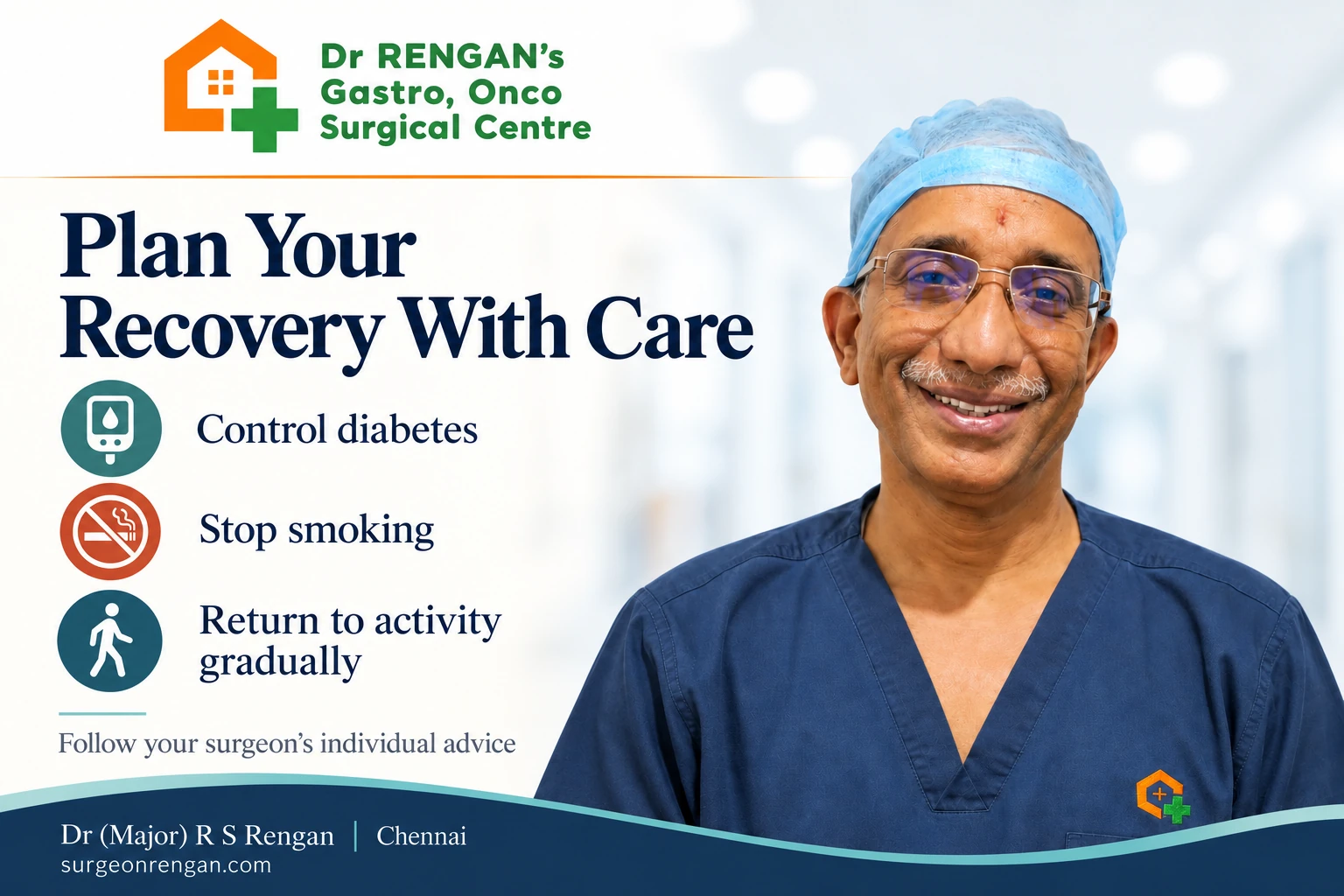
Preparation is particularly valuable before a complex abdominal wall operation. Your team may recommend support to stop smoking, improve blood glucose control, address nutritional problems and work towards a healthier weight. Breathing problems, fitness and other medical conditions also need attention. Perioperative optimisation in complex abdominal wall hernias
The preparation period should have a clear purpose and review point. If symptoms worsen while you are waiting, tell the team. Weight reduction goals, surgical risk and the effects of postponing treatment need to be considered together. European Hernia Society: Midline incisional hernia guidelines
Do not stop blood thinners or other prescribed medicines yourself. Ask for an individual medication plan. Also discuss practical matters: time away from work, transport, help with children or dependent relatives, and access to follow-up appointments.
What is recovery like after recurrent hernia repair?
Recovery varies considerably. A limited groin repair may have a different hospital stay and recovery course from extensive abdominal wall reconstruction. Your surgeon should explain what is likely for your planned procedure and what could change that estimate.
Before discharge, obtain clear instructions about wound care, pain medicines, walking, driving, lifting, exercise and follow-up. Ask when you can return to your particular job; office work and manual labour place different demands on recovery.
Do not use someone else’s recovery timetable as your target. Report increasing pain, fever, persistent vomiting or a wound that becomes red or starts discharging. New chest pain or breathlessness requires urgent medical attention. American College of Surgeons: Ventral hernia repair, American College of Surgeons: Groin hernia repair
Questions to ask before agreeing to another hernia operation
-
- Is this definitely a recurrence, and what confirms it?
- What does my previous operation tell you about the next repair?
- What are the benefits and risks of operating now compared with waiting?
- Why do you recommend this approach?
- Will I need new mesh, and what will happen to the existing mesh?
- Do I need abdominal wall reconstruction?
- What complications and chance of another recurrence should I understand?
- What preparation, recovery time and follow-up should I plan for?
A good consultation should leave you able to explain the plan in your own words. If something is unclear, ask for it to be explained again.
Recurrent hernia consultation with Dr R S Rengan in Chennai
Facing a second operation can be unsettling. Before choosing treatment, you deserve a clear explanation of the diagnosis, the options and the reasons for the recommended approach.
Dr (Major) R S Rengan offers hernia and abdominal wall reconstruction consultations in Chennai, including assessment of recurrent and complex hernias. You can seek a second opinion whether your previous operation was performed recently or many years ago. Dr (Major) R S Rengan: Professional profile
Bring your earlier operation records and scans, and discuss what you most want treatment to improve, whether that is pain, mobility, work or confidence in daily activity.
Book a recurrent hernia consultation with Dr R S Rengan or learn more about Dr Rengan.
This article provides general information for adults with suspected recurrent groin or abdominal wall hernias. Individual treatment requires a clinical assessment.
Frequently Asked Questions
Q: How do I know if my hernia has come back?
A: A new bulge or discomfort near a previous repair can suggest recurrence, but swelling and pain have other possible causes. Examination and, when needed, imaging help establish the diagnosis.
Q: Can a hernia return even after mesh repair?
A: Yes, Mesh does not make recurrence impossible. A recurrence does not automatically mean that the mesh must be removed.
Q: Can a recurrent hernia be repaired successfully?
A: Many recurrent hernias can be treated, but the complexity and expected outcome vary. Ask for an assessment based on your hernia and previous operations rather than a general success percentage.
Q: Can I have keyhole surgery after a previous open repair?
A: Often this is an option for a recurrent inguinal hernia after an anterior repair. It is not a rule for every abdominal wall hernia, and the details of the previous operation must be checked.
Q: Can I exercise while waiting for an appointment?
A: Ask for advice appropriate to your symptoms and recent surgery. Avoid activities that cause pain or a marked increase in swelling. You do not need to assume that all movement is harmful, but sudden pain or a trapped swelling needs urgent assessment.
Q: What if the hernia has returned more than once?
A: Bring records from every previous repair. Multiple recurrences call for a detailed review of the diagnosis, previous techniques and factors that may influence another repair.
Q: How much does recurrent hernia surgery cost in Chennai?
A: The estimate depends on the operation, hospital, implant requirements, length of stay and whether a complex reconstruction is needed. Request a written estimate after assessment, including what is covered by insurance and what may be additional.
Q: Can I consult Dr Rengan for a second opinion?
A: Yes. Use the consultation to review your previous operation, confirm the diagnosis and understand the options before deciding on further treatment.

Related posts


