

My Hernia Has Come Back After Surgery: What Should I Do Next?
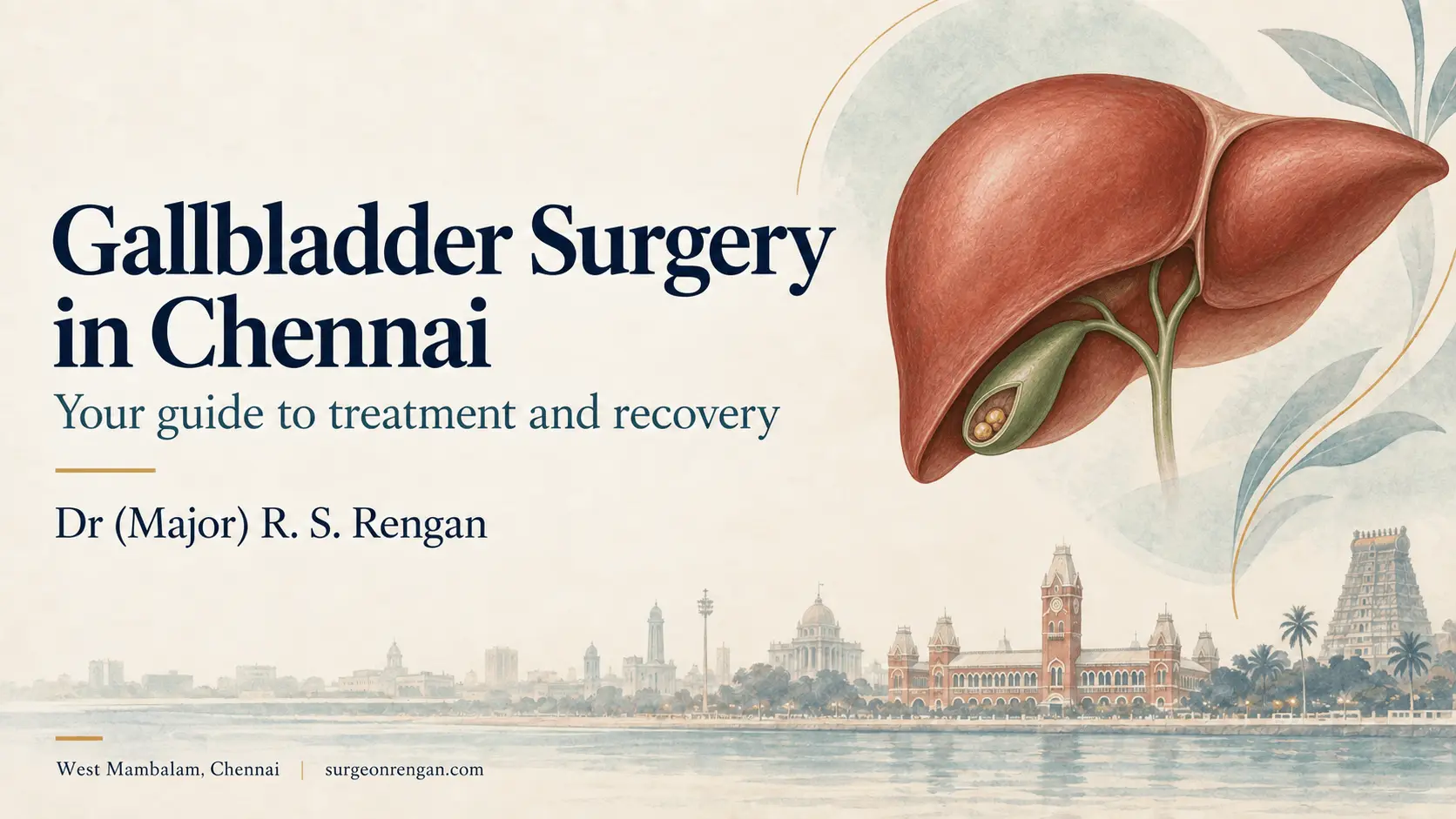
A patient guide to gallstones, keyhole surgery and consultation with Dr (Major) R. S. Rengan
Introduction
Your scan says “gallstones”. Someone tells you to have surgery immediately. Someone else says you should never remove an organ. Meanwhile, you are wondering whether the pain will return, how much time you will need off work and whether you will ever eat normally again.
Before deciding, you need answers to three questions: Are the stones causing your symptoms? Do you need treatment now? What would surgery and recovery involve for you?
If you are considering gallbladder surgery in Chennai, this guide will help you prepare for that conversation with Dr (Major) R. S. Rengan at Dr Rengan’s Surgical Centre, West Mambalam.
Do all gallstones need surgery?
No. Finding gallstones on a scan does not automatically mean you need an operation.
Stones that cause no symptoms can often be left alone. Stones causing pain, gallbladder inflammation or bile duct blockage need assessment and may require treatment. An ultrasound and blood tests are commonly used to investigate symptoms. NHS: Gallstones
Bring your reports to the consultation and describe what actually happens when you feel unwell. Where is the pain? How long does it last? Have you had fever or vomiting? A treatment decision should make sense to you before you agree to it.
Could your abdominal pain be caused by gallstones?
Gallstone pain may be felt under the right ribs or in the upper middle abdomen. It can be severe and steady, lasting more than 30 minutes and sometimes several hours. Nausea or vomiting may accompany it.
Seek emergency assessment for sudden severe abdominal pain, pain with fever or shivering, yellow eyes or skin, or pain spreading to the back with vomiting. Do not wait for a routine clinic appointment. [NHS: Symptoms and urgent warning signs]
If you have been repeatedly treating episodes as “gas” or “acidity”, describe that pattern to your doctor rather than assuming the cause.
Why consult Dr (Major) R. S. Rengan in Chennai?
Choosing a surgeon is a personal decision. You want relevant experience, a clear explanation and an opportunity to ask the questions that matter to your family.
Dr (Major) R. S. Rengan, MS, DNB, is a senior consultant in laparoscopic and general surgery. His centre’s website describes more than three decades of surgical experience and a practice that includes laparoscopic gallbladder surgery. His consultation clinic is in West Mambalam, Chennai. [Dr Rengan’s surgical practice]
The centre’s published approach includes discussing symptoms, examining the patient and reviewing investigations before recommending surgery. [Gallbladder care at Dr Rengan’s Surgical Centre]
Use your consultation to ask:
-
- What makes you think my symptoms are coming from the gallbladder?
- Do I need surgery now, or is observation reasonable?
- What are the benefits and risks in my particular case?
- Where would the operation take place?
- Who should I contact if I have a problem after discharge?
Have a scan showing gallstones? [Book a consultation with Dr Rengan] and bring your reports.
What is laparoscopic gallbladder surgery?
Laparoscopic cholecystectomy is the medical name for keyhole surgery to remove the gallbladder. It is performed under general anaesthesia, so you are asleep during the procedure.
The surgeon uses a camera and surgical instruments through small cuts in the abdomen. The gallbladder is removed, and the incisions are closed. Most patients needing gallbladder removal can have a keyhole procedure.
Sometimes open surgery, using a larger incision, is needed because of severe inflammation or difficulty completing the operation safely through keyhole incisions. Ask your surgeon how this possibility applies to your case. [NHS: How gallbladder removal is done]
Can medicines remove gallstones? What about ERCP?
Medicines can dissolve selected cholesterol stones, but treatment may take months or years, and stones can return. They are generally reserved for particular circumstances, such as when surgery is unsuitable.
ERCP is different from gallbladder removal. It is an endoscopic procedure that can remove stones stuck in the common bile duct. Clearing that duct does not remove the gallbladder itself. Your doctor will explain whether you need duct treatment, gallbladder surgery or both. [NIDDK: Gallstone treatment options]
How long does recovery take?
After an uncomplicated keyhole operation, many patients go home the same day or after an overnight stay. Discharge depends on how well you are recovering.
Light activity can be restarted gradually. Many people can return to work within one to two weeks, but physically demanding jobs may require longer. Follow your own discharge instructions, especially about wound care, exercise and lifting.
Arrange for someone to take you home and stay with you for the first 24 hours. Before returning to driving, you should be able to perform an emergency stop without pain and meet your surgical team’s advice. [NHS: Recovery after gallbladder removal]
When planning surgery in Chennai, discuss your commute as well as your job. Ask specifically about two-wheeler travel, carrying a child, climbing stairs and returning to the gym if these are part of your routine.
Will you be able to eat normally without a gallbladder?
Most people can live normally without a gallbladder. The liver continues to make bile, which flows into the intestine instead of being stored in the gallbladder. Some people notice looser or more frequent stools afterwards; discuss persistent changes with your doctor. [NIDDK: Life after gallbladder removal]
A normal, healthy diet is usually appropriate after surgery. Smaller meals may be easier during the first few days. [NHS: Eating during recovery]
If your main concern is whether you can return to familiar home-cooked food, ask that directly. Your discharge advice should be practical enough to follow at home.
What are the risks of gallbladder surgery?
Gallbladder removal is a commonly performed operation, but complications are possible. These include wound infection, blood clots, bile leakage, injury to a bile duct or another internal organ, and retained bile duct stones. Some complications need further procedures.
Persistent digestive symptoms also deserve assessment. Contact your surgical team promptly for worsening pain, fever, jaundice or an infected-looking wound after surgery. Chest pain or difficulty breathing needs emergency care. [NHS: Complications of gallbladder removal]
Ask Dr Rengan to explain your individual risk and the plan for follow-up before the operation.
How much does gallbladder surgery cost in Chennai?
Request a written estimate for your proposed treatment. Ask for clarity on the hospital, room category, surgeon and anaesthetist fees, operating theatre charges, investigations, medicines and follow-up.
If additional treatment such as ERCP becomes necessary, ask how it would be billed. If you plan to use insurance, check cashless eligibility, pre-authorisation, room limits and exclusions directly with the hospital and insurer.
For a relevant estimate, contact Dr Rengan’s team with your scan report and insurance details. A useful estimate should tell you what is included and what could lead to additional charges.
Frequently Asked Questions
Q: Can I seek a second opinion before gallbladder surgery?
A: Yes. Bring your ultrasound images and report, blood tests, previous prescriptions and any discharge summaries. Ask the surgeon to explain the reason for surgery and whether there are reasonable alternatives.
Q: Is gallbladder surgery painful?
A: You are asleep under general anaesthesia during the operation. Afterwards, wound discomfort is expected, and your team will advise pain relief. Tell them if pain is severe or worsening. [NHS: The operation], [NHS: Recovery]
Q: If the pain has stopped, can I ignore the stones?
A: A settled episode does not mean the problem has disappeared. Gallstone symptoms can recur. Arrange a review to understand whether observation or treatment is appropriate. [NIDDK: Treatment for gallstones]
Q: Where can I consult Dr Rengan?
A: Dr Rengan’s Surgical Centre is at Ground floor, 17 Ram Colony, West Mambalam, Chennai 600033. The website lists consultations Monday to Saturday, 6:00 pm to 8:00 pm. Call ahead to confirm availability. [Clinic contact details]
Take the next step with Dr Rengan
You do not have to make a decision about surgery from a scan report alone. Bring your questions, understand your options and leave with a clear plan.
For a gallstone assessment or second opinion
gallbladder surgery in Chennai, book a consultation with Dr (Major) R. S. Rengan.
Appointments: +91 98411 42294
Dr Rengan’s Surgical Centre, West Mambalam, Chennai
This article provides general patient information. Treatment and recovery advice depend on your individual assessment.

Related posts


