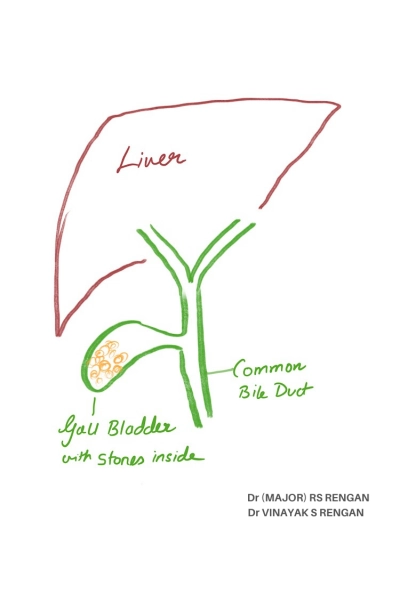
What are gallstones?
Gallstones are formed in the gall bladder due to various reasons. They are accumulations of bile salts and sometimes, of other substances indicative of different diseases. They are common among older women and people with certain blood disorders. Gallstones are mostly benign and asymptomatic conditions, however, they can lead to pain and obstruction of the bile duct if allowed to progress. Further, in some rare cases, long-term gallstones can lead to cancer.
There are mainly two types of gallstones:
Cholesterol stones: Almost 80% of gallstones are cholesterol stones and they are yellow-green in color.
Pigment stones: These are composed of bilirubin and are smaller and darker when compared to cholesterol stones.
Dr. Rengan, a specialist for gallbladder stones always advises patients that both types of stones can be treated with laparoscopic gallbladder surgery.
What is cholecystitis?
Cholecystitis is an inflammation of the gallbladder, most often due to gallstones when they obstruct one of the biliary ducts. As the gallbladder is unable to empty its contents, it leads to pain and eventually, infection and fever. Removal of the gallbladder can lead to the resolution of these symptoms. The relief is often almost immediate and remarkable after such surgeries.
Which people are at risk for gall stones?
- Obese people
- Women > 50
- People consuming a high-fat diet
- After other major abdominal surgeries
- Certain blood disorders like sickle cell anemia
- Patients with a family history
What are the symptoms associated with gallstones?
Pain in the upper belly and back, nausea, and vomiting are some of the symptoms associated with gallstones. This pain is often colicky. Often gallstones may cause cholecystitis infection of the gallbladder. This infection can lead to serious symptoms like fever, pain, and tenderness of the right upper abdomen. When that happens, you may need emergency surgery to remove the gallbladder. Be it gallstones or cholecystitis, Dr. Rengan, who has been performing gallbladder stone removal surgery in chennai has the experience required to diagnose and treat the condition.
What happens when you leave gallstones untreated?
When the stones are small, there is often no problem. When there is more than one stone or a large stone, Surgery to remove the gallbladder is often the only solution. Although the symptoms might seem like they come and go, if gallstones are left untreated, the pain can eventually be severe and long-standing. Symptoms of severe infection and pus formation can occur with cholecystitis and at this point, emergency surgery is indicated. If the gallbladder keeps getting infected and inflamed over many years, it can rarely lead to malignancy or cancer in the gallbladder.
Do I need to get gallbladder stone removal surgery?
Although one-off mild cases of gallstones can be treated with medicines and some lifestyle changes, most cases definitely need surgery. Similarly, if the gallbladder has been infected, surgery has to be definitely performed in order to prevent life-threatening complications from happening.
The first thing that will be done for you by Dr. Rengan’s Surgical Centre is to examine all possible causes of the problem. He will first have a detailed conversation with you about your pain and lifestyle habits, followed by a physical examination. Blood tests and Ultrasound will also be done for a precise diagnosis. Only after considering all factors including long-term consequences and general physical health, will surgery be advised.
Dr. Rengan, a gallbladder specialist in chennai understands that making a decision to get surgery, especially while in pain, is a difficult and scary one. At our center, you can rest assured that your concerns and expectations will be the first consideration at every step of the way.
What surgery is performed for gallbladder stones?
Cholecystectomy is a surgical procedure to remove the gallbladder. Cholecystectomy is a common treatment for symptomatic gallstones and other disorders in the gallbladder.